
Year-Round Profit: Smart Financial Planning for Seasonal Business Owners
As a small business owner, you know that your income can be as unpredictable as the weather. One month, you’re riding high with lots of sales; the next, it feels like a drought. This is the reality for many seasonal businesses, from tax preparers to real estate agents.
If you’re constantly cutting expenses, piling up debt, or dipping into your personal savings to get through the off-season, it's time to take action. Your finances shouldn’t be at the mercy of seasonal trends. It’s time to take control with smarter planning.
Forecasting for Small Businesses
The first step in creating a solid financial plan is to forecast, or predict, your future trends. Think of forecasting as your business’s crystal ball. It gives you a glimpse into your financial future using a mix of historical data and educated guesses.
Start by analyzing your sales and revenue numbers from the past few years. Look for patterns: When are your busiest months? When do things slow down? Use this information to create a sales forecast for the upcoming year, broken down by month or quarter.
Don’t stop there! Look at your expenses too. What costs increase during your peak season? What about your slower months—are there any fixed expenses you need to account for? Mapping out your projected income and expenses will give you a clear picture of your cash flow throughout the year.
To help organize your data, consider using forecasting software like QuickBooks, Xero, or Sage. These programs can generate reports with actionable insights, create forecast scenarios, and provide you with real-time data to make crucial decisions.
There will always be surprises (like global pandemics and supply chain issues), but having a solid forecast helps you prepare for lean times and capitalize on profitable ones.
Addressing Cash Flow Challenges
Once you’ve got your forecasting down, it’s time to tackle cash flow. Seasonal businesses often face feast-or-famine cash flow patterns, and if you’re not prepared, it can be disastrous.
It's time to learn how to manage your cash flow like a pro!
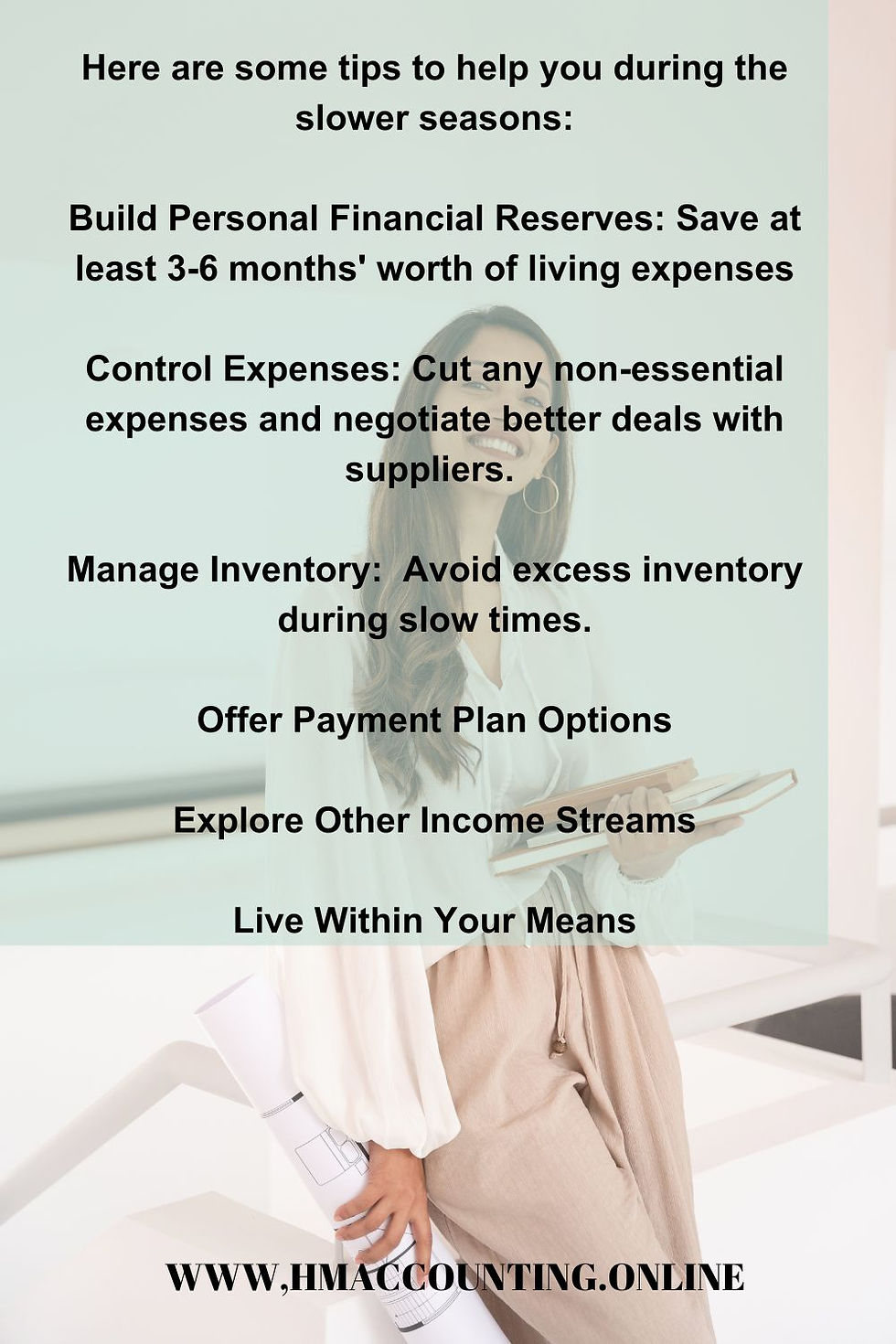
Here are some tips to help you during the slower seasons:
Build Personal Financial Reserves: Save at least 3-6 months' worth of living expenses as a buffer during slow periods. Prioritize this over any business investments or expansions until you have a healthy reserve.
Control Expenses: Monitor spending closely. Cut any non-essential expenses and negotiate better deals with suppliers. These savings will be valuable later.
Manage Inventory: For businesses with physical products, forecast and plan your inventory carefully. Avoid excess inventory during slow times.
Offer Payment Plan Options: For recurring revenue businesses, offer annual or semi-annual prepaid pricing options that encourage customers to pay upfront. This upfront cash helps during dry spells.
Explore Other Income Streams: Find ways to create revenue outside your primary seasonal business. Consulting, info products, and passive income sources can help diversify your income.
Read also:
Curious how much is going's to cost you to start that new business? It can be tricky to know where to start.
This guide walks you through all of the steps on how to determine how much your new business idea will cost. You'll be able to model your budget off an example and move forward knowing exactly what you need to get started!
Live Within Your Means: Avoid upgrading your lifestyle in unsustainable ways during peak periods. This way, you won’t need to drastically cut back during slow times.
Be Your Own Banker (BYOB)
When business is booming, save as much as you can in a dedicated "slow season" savings account. During off-seasons, use this account to cover your cash flow needs.
This strategy has many advantages:
Saving money on fees and interest
Keeping your debt lower
Maintaining financial flexibility
Strengthening financial discipline
Increasing financial independence
Improving cash flow management
There are also emotional benefits to using your own money. It creates a sense of caution and accountability, often leading to more responsible spending. Plus, repaying yourself feels more personal than making a loan or credit card payment.
Break the Cycle of Debt
Breaking free from the cycle of debt can transform your business, especially if you experience seasonal income fluctuations.
Start with accurate forecasting to predict income trends and prepare for slow seasons. Master your monthly cash flow by cutting unnecessary expenses, increasing income streams, and managing your inventory. Finally, create a specific account to borrow from yourself instead of relying on credit.
These strategies can help you build a thriving and resilient small business.
HM Accounting Can Help
If you’re a small business owner looking to take control of your finances and smooth out seasonal cash flow ups and downs, it’s time to seek professional guidance.
At HM Accounting, we specialize in helping entrepreneurs get out and stay out of debt. We have the expertise to transform how you handle your business finances for maximum profit and stability, no matter what the seasons throw your way. Take that first step towards becoming financially fit with us.
For all your company compliance, accounting, bookkeeping and tax service needs, reach out to us on any of the following channels:
Whatsapp : click here
For a Quotation : Click here
To book your free Business Finance Consultation : Click here
Love staying updated on the latest trends, insights, and exclusive content? Don't miss a beat – subscribe to our newsletter today! - SUBSCRIBE HERE


Comments